

Rotator Cuff Tear Treatment
Find expert advice on rotator cuff management with the Painflame Clinic. We provide expert shoulder physiotherapy, focused rehabilitation and non-surgical pain relief.
 6,200+ Reviews Trusted by thousands.
Recommended by experts.

Rotator Cuff Tear Treatment
Find the most advanced non-surgical rotator cuff therapy at Painflame Clinic. The expert physiotherapy we provide and our specially designed shoulder rehabilitation programs reduce pain, increase the motion of your shoulder, and build strength in your shoulders in a natural way.
What is a Rotator Cuff Tear?
The shoulder is dependent on many moving parts that allow you to move, swing and throw. Maintaining this highly mobile, dynamic ball-and-socket joint is the responsibility of the rotator cuff, a group of four muscles (supraspinatus, infraspinatus, teres minor, and subscapularis) and their connecting tendons that stabilise the ball-and-socket joint.
A rotator cuff tear occurs if one or more of these tendons become frayed or completely break away from the bones. A serious accident can result in a tear immediately; however, most of them occur slowly and over time, resulting from normal use and wear.
If your rotator cuff is affected, everyday chores can become extremely frustrating. Reaching for a high shelf, combing your hair, or trying to locate the most comfortable position to sleep may cause pain that is intense. The early detection of a tear is vital. If you don’t take action to help heal partial tears, reduce inflammation, and strengthen surrounding muscles, the shoulder may be weakened and stiff for a long time, which makes it difficult to correct later down the line.
Common Causes of Rotator Cuff Tears
The most common causes of these injuries are either a sudden accident or unexpected gradual wear and tear causes the tendon to weaken. Common causes include:
- A repetitive strain injury: Repeating the identical overhead movements every day wears out the muscles until they begin to get frayed.
- Impingement and Tendonitis: Inflammation that lasts for a long time can cause shoulder muscles to rub painfully against the nearby bones and cause the tissues to weaken.
- Acute Trauma and Falls: Be careful not to put your weight by extending your hand during a fall, or receiving a direct strike to the shoulder may immediately tendinopathy.
- Age-related wear and tear: As we get older, the flow of blood to the tendons decreases naturally, which makes it difficult to heal small daily injuries.
- Sports-related injuries: Tennis, swimming, baseball, as well as heavy weight training that is heavy, place extreme repeated stress on the shoulder area.
- Heavy Lifting: Lifting a heavy object quickly or using improper mechanics may place more stress on the tendons than they can withstand.
- Posture-Related Strain: The rounded and slouching shoulders put pressure on the shoulder joint and squeeze the muscles underneath.
- Exercise and Gym Injuries: Overloading overhead presses or lateral lifts without proper form can strain the cuff.
- Safety Hazards in the Workplace: Jobs that require constant overhead reaching, such as painting, building shelves, or carpentry, put an unending strain on joints.
Symptoms of a Rotator Cuff Tear
Whether the tear happened all at once or over the course of a few years will dictate the signs of a tear. If you have a Rotator Cuff Tear you will most likely be able to see the following:
- Persistent Shoulder Stiffness: An uneasy feeling of being locked that hinders your ability to move your arms fluidly.
- The pain that occurs during movement: A deep, painful ache that is confined to the joint. It is most noticeable when you lift your arm or when bending behind your back.
- Night Pain and Unrestful sleep: Severe discomfort when you lie on the shoulder that is affected, and it often causes you to wake up.
- Tenderness and swelling: An ache that is localised or a slight puffiness on the sides or in front of the shoulders.
- Popping, Clicking or Grating Sensation: An intense catching sensation in the joint whenever you swing your arm in a particular direction.
- Reduced range of motion: Inability to physically extend your arm straight up or extend it all the way towards the other side.
When Should You Seek Treatment?
See a physician promptly if you feel an abrupt, extreme decrease in arm strength following an accident or fall, or if your shoulder begins to swell in a short time.
In the case of a painful but gradual pain, then it’s time to consult a doctor if the pain persists for longer than 2 weeks, keeps you awake at midnight, or hinders your ability to perform your usual day-to-day routine. A tear that is caught early can stop the tear from transforming into a complete tear that needs surgery.
Diagnosis of a Rotator Cuff Tear
The first step to fixing the problem is to determine exactly what is broken. At the Painflame Clinic we do a thorough evaluation to find out the cause and severity of the injury. The procedure we follow includes:
- Physical Evaluation: We look at the alignment of your shoulder, look for any tender areas and then compare how the arm you are injured moves in comparison to your normal arm.
- Analysing Posture and Alignment: Examine your upper back, neck and shoulder blades in order to determine if any muscle imbalances cause your shoulder to be too active.
- Mobility and range of motion tests: We gently guide your arm in different directions to pinpoint exactly where the motion is locked up or causes pain.
- Specific Orthopaedic tests: We use targeted physical motions (like tests like the Drop Arm or Empty Can test) to determine the tendons of a specific area and test their strength.
- Imaging referrals (X-ray and MRI): An X-ray can identify arthritis and bone spurs. While an MRI allows us to look at the soft tissue in order to identify the exact size of the tear.
Rotator Cuff Tear Treatment at Painflame Clinic
At Painflame Clinic, we focus on recovery strategies that are non-surgical and effective. Our programs for physiotherapy are created to eliminate discomfort, restore the mobility of your joints, and increase your muscle strength to be back in your routine.
Physiotherapy for Rotator Cuff Tears
We design custom-made programs for physical therapy that are tailored to your needs. We follow a step-by-step process that safely takes your treatment from basic treatment for pain to more advanced training.
Manual Therapy
Our team employs hands-on methods such as joint mobilisation and the release of deep tissues. It helps loosen tight, protective muscles, releases the scar tissue and helps get the joint back to its normal motion.
Advanced Electrotherapy
For calming intense discomfort and assisting the tissues to heal more quickly, we employ specific methods. TENS, ultrasound therapy, as well as laser therapy, can help to reduce massive swelling and also speed up the healing process for the injured tendon.
Targeted Rehabilitation Exercises
After the initial pain has gone away, we begin certain exercises designed to build healthy muscles surrounding the tear, as well as stabilisers inside the shoulder blades. This helps balance the joint to ensure that the injured tendon doesn’t endure mechanical stress.
Ergonomic & Posture Correction
Treatment of your shoulder doesn’t suffice when you return to habits that harm the shoulder. Examine your workplace configuration and sleep positions. We offer simple modifications to ensure your shoulder is free of strain all day long.
How to Prevent a Rotator Cuff Tear
- Enhance the Strength of the Shoulder Complex
- Maintain a Good Posture
- Make sure you warm up properly
- Beware of Repetitive Strain Injuries to the Head
- Utilise the correct lifting techniques
Frequently Asked Questions
What's the most effective treatment for tears in the rotator cuff?
If you suffer from degenerative tears, the most effective treatment is focused physical therapy. Combining hands-on treatment and exercises typically restores function without surgery.
Does physiotherapy aid in the tear in your rotator cuff?
Yes. Physical therapy relieves pain, helps restore mobility and helps strengthen the muscles around the tendon to handle the strain of the tendon that has been injured.
How long will rotator-cuff recuperation require?
The majority of mild to moderate tears heal within six to twelve weeks of regular physical therapy. A complete tear can require a long period of rehab.
Does a rotator cuff tear recover with intervention?
Many people are totally pain-free with no surgical intervention. When you train the shoulder muscles, you can regain mobility and strength.
What is the cause of rotator cuff discomfort that is not an unexpected injury?
It's usually due to the wear and tear that occurs over time. Poor circulation of blood to the tendon and repetitive everyday movements and slumping tend to weaken the tissues as time passes.
Does rotator cuff pain relate to arthritis?
These are distinct issues, yet a long-term untreated tear in the rotator cuff alters how the joint can move. In time, the added pressure can cause joint cartilage. This can cause shoulder arthritis.
Patient Feedback & Success Stories
Treatments
Our Services
Our doctors
Meet more Painflame specialists






Dr. Divakar Kumar
Sports Rehabilitation, Sports Injury Management, Musculoskeletal Rehabilitation, Performance Enhancement, Strength & Conditioning
Book Appointment

Dr. Jaya Sharma
Pilates Expert | Musculoskeletal Rehabilitation, Sports & Pelvic Floor Specialist
Book Appointment

Dr. Priyanka Bhuyan
Tailbone (Coccyx) Treatment, Chiropractic Care, Spine & Joint Rehabilitation
Book Appointment
Dr. Saksham Kapoor
Sports Physiotherapy, Musculoskeletal Rehabilitation, Pain Management, Injury Prevention & Recovery
Book AppointmentLatest Blogs
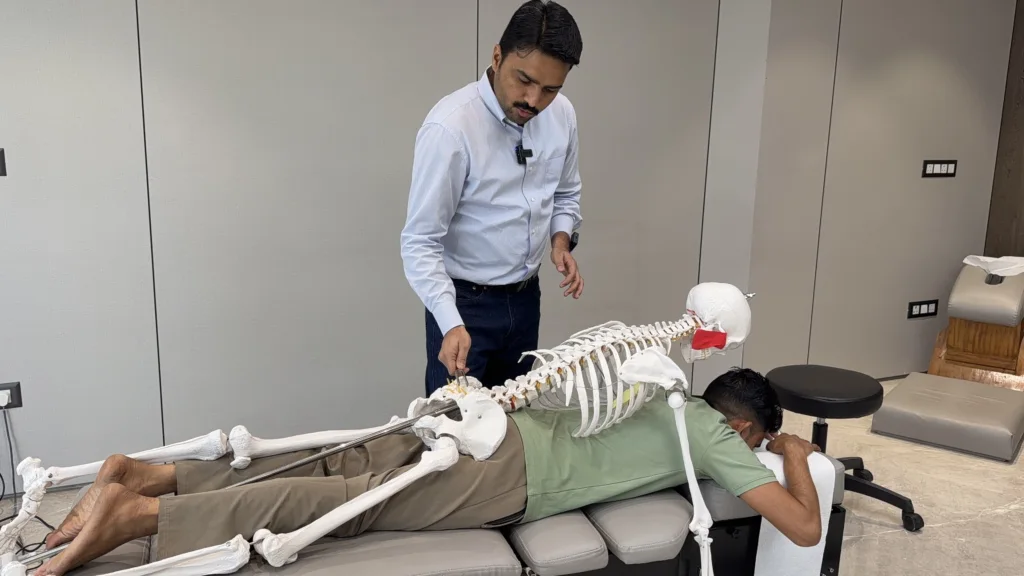
Chronic Pain? What Physiotherapy in Gurgaon Can Actually Do
If you’re in Gurgaon and dealing with neck stiffness, lower back pain, or recovering from a…
Read More
Why Ignoring a ‘Minor’ Sports Injury Today Leads to Chronic Joint Issues Tomorrow
Pain-free doesn’t mean healed. Structural weakness, joint instability, and micro-tears in connective tissue often persist well…
Read More
Tired of Back Pain? Here’s What Your Spine Is Actually Trying to Tell You
Most lower back pain comes down to daily habits — long hours hunched at a desk,…
Read More