

IT Band Syndrome Treatment
Non-surgical care with personalised rehabilitation and specialist-led treatment at Painflame Clinic.
 6,200+ Reviews Trusted by thousands.
Recommended by experts.
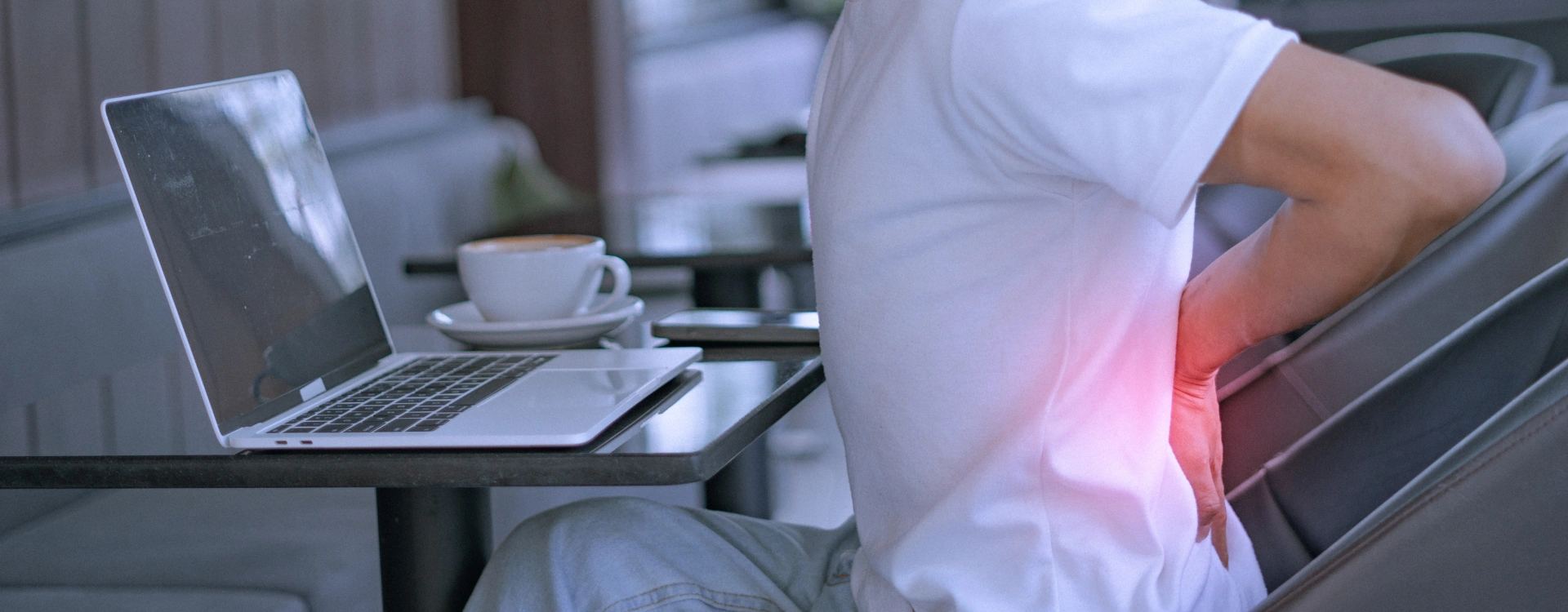
IT Band Syndrome Treatment: Why It Isn’t Just A Knee Problem
Do you experience pain on the outside of your knee after running for a mile or two, which usually eases off the moment you stop running? Has climbing down the stairs become more difficult than climbing up? The pain may appear after travelling the same distance almost every time. Such an oddly predictable pattern linked with particular activities might point to IT band syndrome, a common overuse injury that is often seen in cyclists and runners. And an effective approach to IT band syndrome goes beyond the point where it hurts to address the underlying cause.
What is IT Band Syndrome
A fibrous band of connective tissue starts at the hip, runs along the outside of the thigh, crosses the knee, and finally attaches just below it. This is called the iliotibial band. This band plays a crucial role in the transmission and distribution of forces around the hip and knee. IT band syndrome develops if this band becomes irritated. This irritation may come from repeated loading and compression of tissues around the lateral knee. The condition was first documented in military recruits in the 1970s, and now it is one of the most common injuries among long-distance runners and cyclists.
Since the pain is felt at the knee, it becomes natural for people to suspect knee-related problems behind this discomfort. But the right treatment plan accounts for the entire structure because the band is anchored at the hip, and what happens at the knee is largely influenced by what is happening up the leg.
Why It Happens?
The friction is normal and happens in almost every runner’s knee to some extent. The above-mentioned symptoms develop when the repetitive loading exceeds the capacity of the tissue to tolerate load. There are multiple reasons that may result in such increased friction, not just one. A sudden increase in running mileage, hill training, unsuitable footwear, running on cambered surfaces, naturally tight thigh or hip muscles, and weakness in hip muscles; all of these factors may contribute to the development of IT band syndrome.
Common Symptoms
The pain resulting from this condition is felt on the outer side of the knee. It may spread a bit up the outer thigh in some cases. This one appears after some running or cycling and settles pretty quickly as one rests. This is the distinctive pattern of IT band syndrome-related pain, which may differ from the pain of knee-related issues. When the issue develops further, the pain starts to appear earlier in a run, may linger afterwards, and can also appear during simple activities like walking down stairs or sitting while the knee is bent.
Who Is At Risk?
Though it occurs commonly in cyclists, hikers, skiers, and players in other sports involving frequent knee bending, long-distance runners are more commonly affected due to repetitive running loads. This risk may rise further if there is a jump in the training volume or intensity, consistent running on the slanted road surface, and weak hip stabilising muscles. When someone changes the training routine without giving the body enough time to adapt, they may increase the risk of developing this condition.
When To Seek Prompt Medical Attention
IT band syndrome is not dangerous in itself, but one should be attentive to some signs, and if these signs accompany the symptoms of this condition, it deserves a thorough assessment rather than relying on self-management alone:
- A persistent pain that wakes you up at night
- Warmth, swelling, or redness around the knee, which may be due to infection or other serious underlying issues
- Worsening pain that doesn’t ease even after reducing training
- A frequent feeling of the knee giving way, catching, or locking
Diagnosis
Diagnosis focuses on the way pain appears. If the pain appears after running for some time and disappears after rest is a common pattern. During examination, doctors often find tenderness over a bony point outside of the knee. If the knee is bent or straightened by applying light pressure over it, the pain may be reproduced. In addition, diagnosis also assesses single-leg control, lower-limb mechanics, and hip strength. Imaging is usually not required, but sometimes it can be used to rule out other causes or when the presentation of symptoms doesn’t fit the usual pattern.
How Physiotherapy Helps
An effective IT band syndrome usually has its root at the hip or lower limb in addition to repeated training load on the affected region. Physiotherapy goes beyond just stretching the sore spot. The rehabilitation here starts after a thorough understanding of the condition, which may include a short period of either reduced or modified training that helps in calming the irritation. Manual therapy forms a part of rehabilitation to assist in easing tightness in the surrounding thigh and hip muscles. A structured programme works on improving hip control. The approach may also review training load and running mechanics together because calming the current flare-up is just as important as addressing the underlying pattern.
Treatment At Painflame
At Painflame Clinic, we assess the condition thoroughly by looking into the hip, pelvis, and the running pattern of the individual along with the state of the knee. A comprehensive approach matters because treatment may need to go beyond the painful area in the case of IT band syndrome. As per the findings of this assessment, we build a tailored plan for the individual that may include strengthening exercises, properly addressing the weakness contributing to this condition, manual therapy, and movement retraining wherever appropriate. Sports persons who want to return to their intense activities may benefit from our dedicated sports injury rehabilitation that guides their gradual and progressive return.
Recovery Timeline
Mild cases that are detected early may ease with a few weeks of consistent care. Cases that have been present for a long time and have become more established, or the ones that have changed the running gait of the individual, take longer to improve. In many cases, IT band syndrome reacts well to conservative treatments, and most cases improve without needing invasive treatment. Structured rehabilitation provides adequate help so that runners and cyclists can return to their activities once they gain enough strength and stability to support such activities.
Preventing IT Band Syndrome From Coming Back
The likelihood of recurring IT band syndrome can be reduced by working on building hip and gluteal strength even after completing formal training. Keeping the load on the band manageable by avoiding long stretches of training on cambered roads, replacing worn footwear properly, and increasing the intensity of exercise gradually may also help.
Frequently Asked Questions
Is it okay to run while my condition is getting treated?
People may run in many cases, but running needs modification, such as reduced distance, frequency, or pace, so that overall load remains below the point that may cause pain. This modification continues until the capacity is rebuilt and symptoms ease. If the band has become more irritated, people may need a break from intense activities.
Can stretching improve the IT band issue?
This band is fibrous, and it is less likely to lengthen with stretching. Lasting benefit in this case results from load management and progressive strengthening rather than relying on just stretching. Some level of symptomatic relief may be seen in surrounding muscles from stretching.
Should I use a foam roller to ease the symptoms of IT band syndrome?
Using it might help you by providing temporary relief from tightness and discomfort in some cases. The thing worth noting is that using it will not address the underlying factors that contribute to IT band syndrome.
Why do I start facing this issue whenever I increase my running mileage?
It can happen when the training load increases more quickly and does not give the body enough time to adapt. You should increase the mileage gradually. If the issue persists, opt for a progressive strengthening programme.
Patient Feedback & Success Stories
Treatments
Our Services
Our doctors
Meet more Painflame specialists




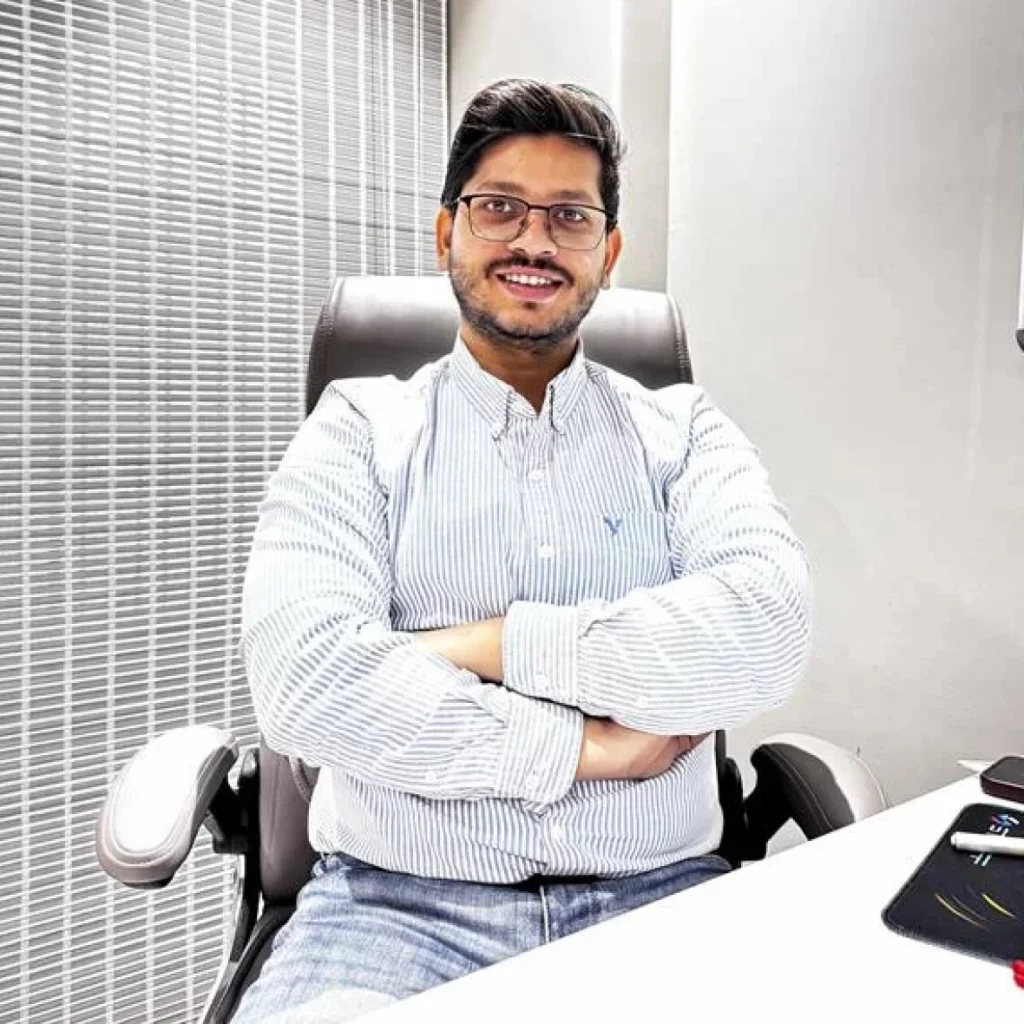

Dr. Divakar Kumar
Sports Rehabilitation, Sports Injury Management, Musculoskeletal Rehabilitation, Performance Enhancement, Strength & Conditioning
Book Appointment
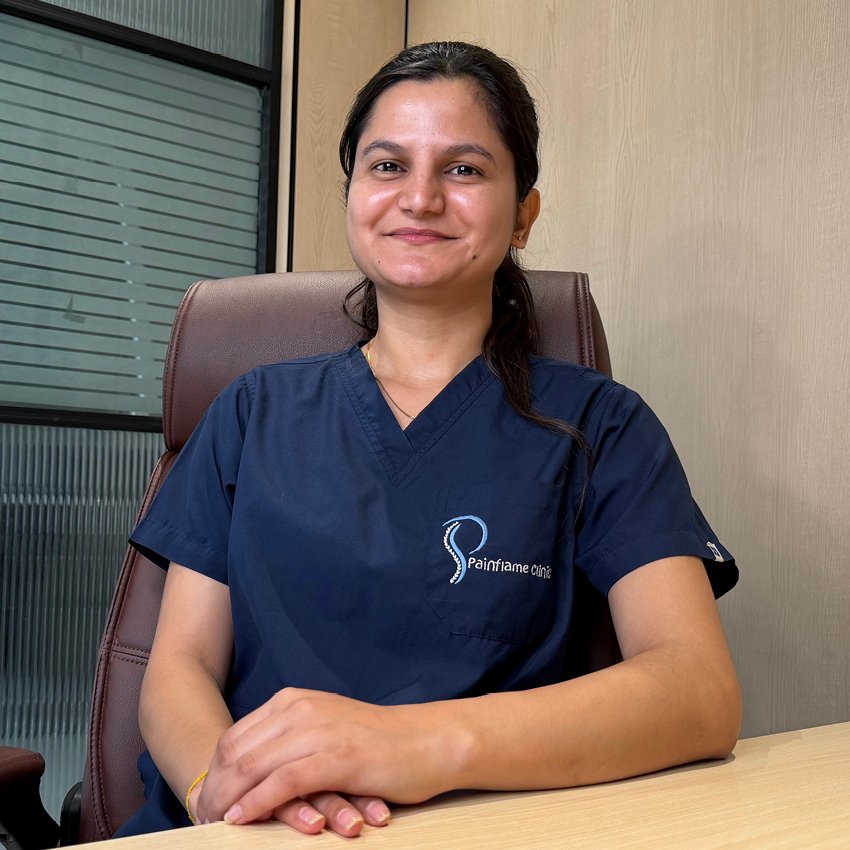
Dr. Jaya Sharma
Pilates Expert | Musculoskeletal Rehabilitation, Sports & Pelvic Floor Specialist
Book Appointment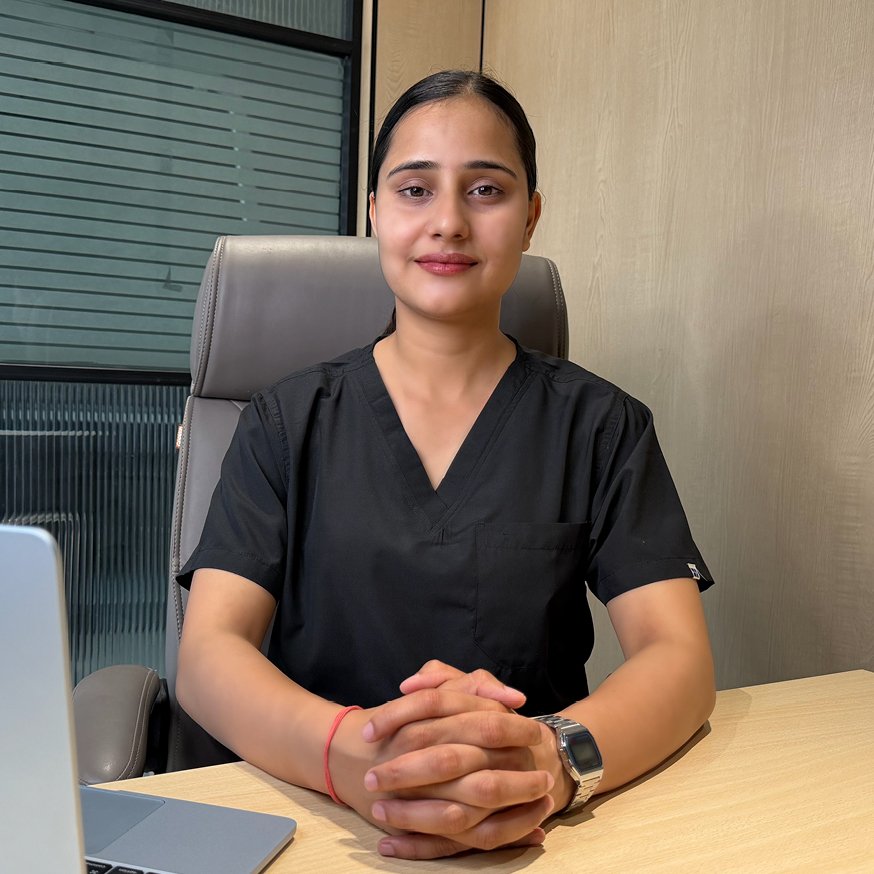
Dr. Priyanka Bhuyan
Tailbone (Coccyx) Treatment, Chiropractic Care, Spine & Joint Rehabilitation
Book Appointment
Dr. Saksham Kapoor
Sports Physiotherapy, Musculoskeletal Rehabilitation, Pain Management, Injury Prevention & Recovery
Book AppointmentLatest Blogs
Neck Stiffness: कारण और 5 मिनट की एक्सरसाइज से राहत
गर्दन की अकड़न (Neck Stiffness): कारण और 5 मिनट की एक्सरसाइज से राहत क्या सुबह उठते…
Read More
Navel Displacement: लक्षण, पहचान और उपचार
क्या आपको अक्सर पेट में अनजान दर्द रहता है? क्या खाने के बाद ब्लोटिंग, गैस या…
Read MoreCore Strengthening Exercise जो कमर दर्द को जड़ से खत्म करे
क्या लंबे समय बैठने के बाद कमर दर्द होने लगता है? क्या सुबह उठते ही पीठ…
Read More