

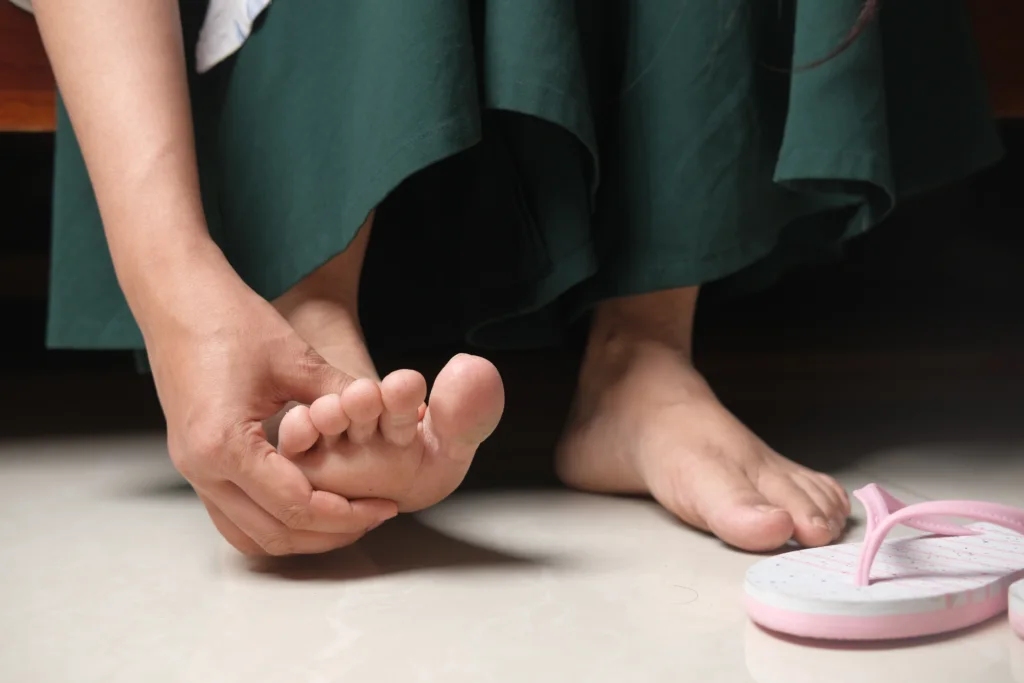
Most working people have three types of footwear: a pair of chappals for home, flats for the office and sneakers for evening walks. But does it support the use you have designated for the footwear? Because if it does not, you may end up with pain and soreness.
Here we explain how footwear affects the feet and knees, how the three compare and how to choose footwear for knee pain while ensuring suitability with your lifestyle.
How Does Everyday Footwear Affect Your Feet and Knees?
While comfortable footwear offers stability during walking and reduces excess pressure on the joints, the wrong one can become the cause of:
- Knee discomfort
- Hip pain
- Toe squeezing
- Arch and heel strain
- Pressure on the forefoot
Footwear affects the feet and knees through four factors:
Arch support
Arch support is the contoured part of the footbed that sits under the sole. It spreads pressure across the foot and stops the arch from collapsing. People with flat feet or overpronation support. A study of 1,903 older adults found that those with the flattest feet the odds of frequent knee pain.
Using footwear that also lacks proper arch support leads to knee discomfort, increases knee joint stress, and reduces shock absorption capability.
Cushioning
Footwear has gel or foam cushions to absorb shocks when the foot hits the ground.
Good heel cushioning eases pressure on the soles, reduces muscle fatigue and even pain. But poor cushioning causes uneven compression and affects balance, muscle and joint load.
and Grip
Fit decides how close and comfortable the shoe wraps the foot, and grip defines how well it holds the ground without slipping.
A loose fit changes the gait (the pattern of walking), causing stress on the knees. Similarly, poor grip results in slips and sudden jerks.
Flexibility
Sole flexibility is the ability of the sole to twist, bend and move along with the foot’s movement.
A highly flexible or easily bending sole increases pressure on the heel and forefoot and raises. Low-flexibility or stiff shoes restrict natural movement and lead to compensatory strain on the foot.
Are Chappals Bad for Your Feet and Knees?
You can wear chappals or flip-flops, a light, open-toed footwear with a flat sole, for short use. But when worn all day, they change the way you walk and strain the feet, knees and back.
Here is how chappals score on the four factors:
- Arch support: A flat and thin footbed leaves the foot’s own arch to do all the work.
- Cushioning: The soft rubber or polymer sole offers some cushioning but lacks shock absorption.
- Fit and grip: Held only by a strap, chappals make the toes work harder to keep them on.
- Sole flexibility: The sole bends easily, but the strap lets the foot slide inside the chappal instead of moving with it.
When Should You Wear Chappals, and When Should You Switch?
| Flip-flops are prone to slipping. So to stop a loose chappal from catching on the ground, people bend their knees or flex their ankles more. In a study published in the Journal of the American Podiatric Medical Association, walking in flip-flops and changed the ankle angle compared with sneakers. Over hours, this changed gait can strain the feet, ankles, knees, hips and back, causing pain from flip-flops. |
Chappals are a good option for short walking, like moving around the house or a quick walk to a nearby shop. But switch to supportive shoes if:
- You are expecting a long-distance walk, running errands for hours or standing all day
- You have nerve damage, poor blood flow or past foot problems
Are Flat Shoes Bad for Your Knees?
Flat shoes, like juttis or , are not harmful in themselves. However, if they have a thin and flexible sole, then they are likely to give sore knees less relief than supportive shoes.
Here is how flats score:
- Arch support: Little to none, as the footbed is usually level.
- Cushioning: Thin leather or fabric soles absorb little shock.
- Fit and grip: Juttis and ballet flats hold the foot well, while Kolhapuris rely on a toe loop and straps.
- Sole flexibility: High, and most flats have no heel drop, so the heel sits level with the toes.
When Should You Wear Flat Shoes, and When Should You Switch?
| In a randomised trial published in the , 58% of people who wore supportive shoes had less pain while walking, compared with 40% of those in flat, flexible shoes. |
You can wear flats for sedentary days, like desk-based office hours or a sit-down dinner, as long as your feet and knees feel comfortable. However, switch to supportive and laced shoes when you have:
If you still prefer flats, add an insole or heel pad for support, and replace the pair once the sole wears out.
Are Sneakers the Best Shoes for Knee Pain?
Sneakers are closed sports shoes made for walking, fitness and light exercise. They make good footwear for knee pain if there is good cushioning, support and a stable heel.
Here is how sneakers score:
- Arch support: Many sneakers come with built-in arch support, which helps with foot, ankle and knee alignment
- Cushioning: A properly cushioned sole softens each step and reduces impact on the knees
- Fit and grip: Most have a heel counter, the stiff cup at the back of the shoe that holds the heel steady and can reduce knee pain
- Sole flexibility: The sole bends with the foot, but very soft sneakers can feel less stable.
When Should You Wear Sneakers, and When Should You Switch?
Sneakers are made for the busiest parts of your day, such as long walks, light jogging or a day of errands. If you are buying a pair to ease knee pain, prioritise the ones that have:
- A heel drop of , so the heel sits only slightly higher than the toes
- A well-cushioned sole
- A rocker sole, curved at the front and back, to help ease
- A wide toe box that lets the toes spread naturally
How to Choose Footwear for Flat Feet and Knee Pain
The right footwear for knee pain or flat feet depends on how long you stand and how your feet are built.
| Situation | Best pick |
| Short spells at home, with no foot pain | Chappals |
| A low-activity day | Flats or sneakers |
| Long walks, errands or standing for hours | Cushioned sneakers |
| Knee pain or knee osteoarthritis | Cushioned sneakers with a firm heel |
| Flat feet | Shoes with arch support, or add insoles |
| pain from plantar fasciitis | Shoes with cushioned heels and good arch support; skip chappals and backless slippers |
If you have heel pain, advice also suggests you:
- Use insoles or heel pads
- Try to lose weight if you are overweight
- Avoid walking or standing for long periods
- Avoid high heels and tight, pointy shoes
- Try not to walk barefoot on hard floors
When Should Foot or Knee Pain Be Checked by a Physiotherapist?
If you have switched to better footwear for knee pain but still struggle with the same problem after a few weeks, get it assessed.
| Signs | Who to contact |
| Foot or knee pain makes walking, climbing stairs or standing difficult | Physiotherapist |
| Pain eases for a while but keeps coming back | |
| The knee is very painful | Doctor or hospital, urgently |
| You cannot put any weight on the knee | |
| The knee is badly swollen or has changed shape |
A physiotherapist will check your gait and foot posture, then suggest the right footwear, insoles and strengthening exercises.
Conclusion
No single pair of footwear suits every part of your day.
- Chappals are fine for short use
- Flats suit low-activity days on healthy feet
- Cushioned walking shoes are the better footwear for knee pain on long, busy days
If your knees or heels still hurt after switching, Painflame’s physiotherapists in Gurugram, Noida and Delhi, or at home in Gurugram, can assess your gait and build a plan around it.
FAQs
Can wearing the right footwear prevent knee osteoarthritis?
No, there is no clinical evidence that supportive shoes prevent knee osteoarthritis. They may ease pain once the condition has set in, but body weight plays a much bigger role in knee health than footwear.
What should people with knee osteoarthritis wear at home instead of flat slippers?
Indoor footwear with good cushioning, a firm heel counter and arch support may help people with knee osteoarthritis more than flat slippers.
Is it better to walk barefoot at home than to wear slippers?
For healthy feet, walking barefoot at home is usually fine, as the foot is itself capable of shock absorption. But people with heel pain should still avoid walking barefoot on hard floors.