
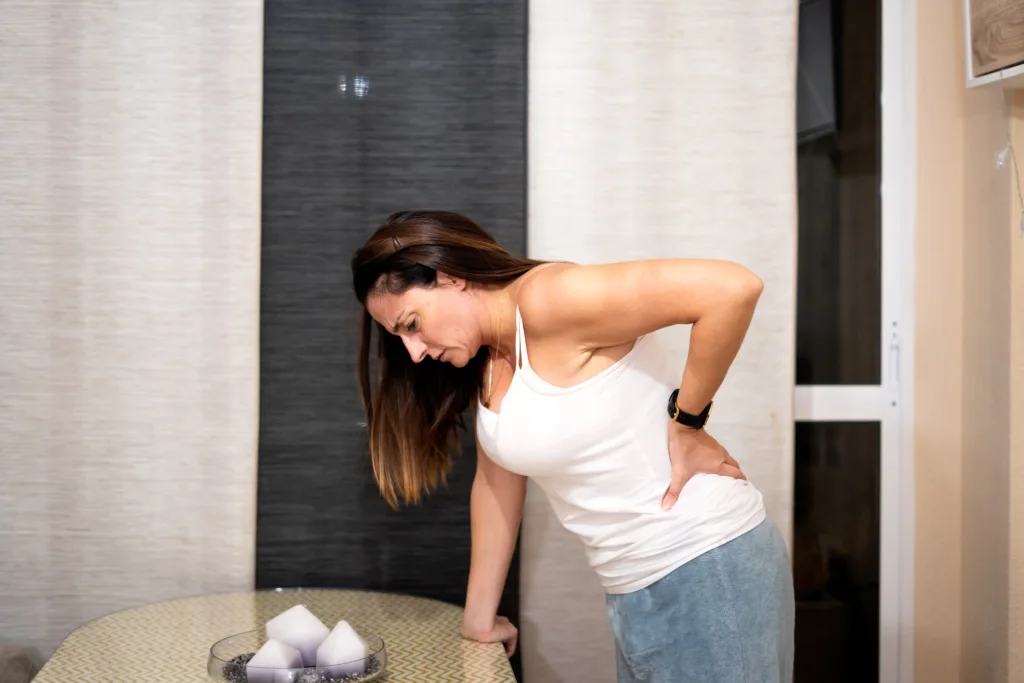
Does your day include 90 minutes in a cab from Gurgaon to Noida with a thick wallet in your back pocket? If so, you may know the feeling: by the time you step out, one buttock is sore, and a burning ache runs down the back of your leg. It eases after a short walk, then comes back on the ride home. That pattern has a name: wallet sciatica.
Wallet sciatica, also called wallet neuritis or fat wallet syndrome, is buttock and leg pain caused by sitting on a bulky wallet that presses on the sciatic nerve. The nerve runs from the lower back through the buttock and down to the feet, so the pain follows that path. It feels like regular sciatica, but the fix can be as simple as moving your wallet. Here is how it happens, how to tell it apart from other back problems, and what to do about it.
How Does a Back-Pocket Wallet Cause Sciatica-Like Pain?
A back-pocket wallet hurts in two ways: it squeezes the nerve directly, and it throws your posture off balance while you sit. Here is how:
- Direct pressure: The wallet pushes on a muscle in your buttock, which squeezes the sciatic nerve that runs underneath it.
- Uneven posture: A bulky wallet puts uneven pressure on the hip and pelvic muscles, discs and nerves.
A phone or even a handkerchief in the back pocket can press on the nerve the same way.
What Doctors Have Seen in Real Patients With Wallet Sciatica
Wallet sciatica isn’t new. Doctors first reported it in 1978, in a lawyer who carried his credit cards in a back-pocket wallet. A case report from Bangladesh later found it in three working professionals:
- A specialist doctor, a driver and a banker
- Each had buttock pain running down the leg on the wallet side, worse after sitting on a heavy wallet
- All three got better once they stopped carrying it and stretched the muscle in the buttock
The same report warns that wallet sciatica is easily mistaken for sciatica caused by a spine problem.
Who Is Most at Risk of Wallet Sciatica?
People who sit for long hours on a back-pocket wallet are most at risk. India’s National NCD Monitoring Survey 2017-18 found that city adults spend 324 minutes a day sitting on average, office hours included. That figure covers all city adults, not just desk workers. Your risk is higher if you:
- Drive or commute long distances
- Work at a desk all day
- Carry a thick wallet packed with cards, cash and receipts in your back pocket
Is Your Leg Pain Wallet Sciatica or Something Else?
Wallet sciatica usually causes pain that builds while you sit on the wallet side and eases once you stand or remove it. This pattern sets it apart from a slipped disc or spinal sciatica.
| What you feel | What it may point to |
| Buttock and leg pain while sitting on the wallet side, easing when you stand or remove it | Wallet pressure |
| Pain or numbness in the buttock and down the back of the leg, worse with long sitting, walking or climbing stairs | Piriformis syndrome |
| Lower back pain with pain in the buttock, hip or leg, often linked to lifting, long sitting or driving | Slipped disc |
| Pain in the bottom and back of one leg that gets worse when you move, sneeze or cough | Sciatica from a spine problem |
What Should You Do if Your Leg Hurts After Sitting?
If your leg hurts after sitting, take the wallet out of your back pocket first, keep moving, and watch for the few signs that need a hospital.
Try the Wallet Test
- Empty both back pockets before you sit or drive, for several days
- Keep your wallet in a front pocket, a bag or a desk drawer
- Avoid sitting for long stretches; stand up and walk regularly
- Carry on with normal activities and gentle exercise
- Use a heat pack on the sore area
When to See a Physiotherapist
See a physiotherapist if the pain remains:
- Unimproved after a few weeks
- Gets worse
- Stops you doing your normal activities
When to Go to Hospital the Same Day
The NHS lists these as emergency signs:
- Sciatica in both legs
- Severe or worsening weakness or numbness in both legs
- Numbness around the genitals or bottom
- Trouble starting or controlling urination, or controlling your bowels
Go to a hospital emergency department straight away if you notice any of the mentioned signs. Don’t drive yourself. Ask someone to take you, or call 112 for an ambulance.
How Does a Physiotherapist Help With Wallet Sciatica?
A physiotherapist works out whether the wallet, the piriformis muscle or the spine is behind your pain, then treats that cause. Treatment usually includes:
- Stretches for the buttock muscle that presses on the nerve
- Strengthening exercises for the buttock muscles, such as clamshells and fire hydrants
- Manual therapy, where the physio works on the painful area by hand
- Advice on managing your symptoms, including how you sit
- Exercises to do at home between sessions
Final Thoughts
Wallet sciatica is easy to overlook because the cause may be sitting right in your back pocket. If you notice buttock or leg pain after sitting for long periods, try removing your wallet and keeping your back pocket empty. If the pain continues or gets worse, a proper assessment can help identify what’s behind it.
At Painflame, we assess your symptoms and recommend exercises based on the cause of your pain. Home visits are available in Gurgaon, and clinics in Gurgaon, Noida, Faridabad, Paschim Vihar and Dwarka. Book an assessment if the pain hasn’t settled.
Frequently Asked Questions
Will an MRI scan show wallet sciatica?
An MRI scan usually doesn’t show wallet sciatica, because the lower spine typically looks normal in this condition. A nerve conduction test may show damage to the sciatic nerve instead.
Can a thin wallet still cause wallet sciatica?
Yes, a thin wallet can still cause wallet sciatica. Even relatively small wallets have caused symptoms, and the safe size is unknown, so keep your back pocket empty when you sit.
Is sciatica 100% curable?
Most people recover fully from sciatica. About 90% of people with sciatica get better without surgery, most within a few weeks, and staying active once the pain settles lowers the chance of it coming back.