

Stress vs urge incontinence is one of the most important differences to understand when dealing with bladder leakage. Bladder leakage is a problem many people experience but rarely talk about openly. Some people leak urine when they cough, laugh, sneeze, or exercise, while others feel a sudden, intense urge to urinate and cannot reach the bathroom in time. Although these symptoms may seem similar, stress vs urge incontinence involves two different types of urinary leakage with different causes and treatment approaches. Identifying whether you have stress incontinence or urge incontinence is the first step toward the right treatment. The good news is that both types can often be managed successfully with the correct approach, and many people choose incontinence physiotherapy in Gurgaon as a safe, non-surgical way to improve bladder control and regain confidence.
Understanding Urinary Incontinence
Urinary incontinence refers to the involuntary leakage of urine. Despite common belief, it is not a normal part of ageing. It is a medical condition that can often be treated successfully.
The bladder stores urine, and pelvic floor muscles aid in controlling its release. If these muscles become weaker or bladder signals turn too active, leakage could happen. If you have expert guidance and Incontinence physiotherapy Gurgaon, patients can build muscles, improve bladder behaviour, and increase control.
The two most common types of urinary incontinence include:
- Stress-related incontinence
- Urge incontinence
In some cases, individuals may be able to experience the two.
What exactly is Stress Incontinence?

Leakage During Physical Activity
Stress incontinence is a condition that occurs because the pressure (or “stress”) occurs when stress is put on the bladder. The pressure could result from everyday activities, such as:
- Coughing
- Sneezing
- Laughing
- Running
- The act of lifting something heavy
When the muscles of the pelvic floor become weak, the muscles will not be able to adequately support the bladder during these exercises, resulting in small amounts of urine leakage.
Incontinence is a common complaint for women during pregnancy or childbirth. Some men experience it following a prostate procedure. If this is the case, Stress incontinence Gurgaon physiotherapy is extremely beneficial to rebuild the strength of the pelvic floor.
Signs of Stress Incontinence
You may have stress incontinence if:
- Leakage occurs only in physical movements
- There is no sudden urge before the leakage
- The volume of urine leaked is typically small
The process of beginning Incontinence physiotherapy Gurgaon in the early stages can stop the condition from becoming grave over time.
What Causes Urge Incontinence?
A sudden and intense urge to urinate
Urge incontinence is different from stress incontinence. Instead of leakage during activity, patients experience a sudden and intense urge to urinate, often followed by leakage before reaching the bathroom.
It happens because the bladder muscle contracts involuntarily regardless of whether it’s completely filled. This is frequently linked with the symptoms of an overactive bladder.
A lot of patients experience relief from Urge incontinence physiotherapy Gurgaon that concentrates on controlling bladder hyperactivity and increasing coordination.
Symptoms of Urge Incontinence
Common signs include:
- An uncontrollable, sudden need to pee
- Urination frequently during the day
- Waking up multiple times at night to urinate
- Leakage before reaching the toilet
If these symptoms sound familiar, consulting an expert for Incontinence physiotherapy Gurgaon can help restore bladder control and improve quality of life.
Stress vs Urge Incontinence: Key Differences
Being aware of your symptoms will help you determine your condition.
Stress Incontinence
- triggered by pressure or movement
- Leakage occurs without a strong urge
- It is caused primarily by the weak pelvic muscles
Urge Incontinence
- Caused by rapid bladder contractions
- A strong urge to stop the leakage
- It is often associated with frequent urination.
If you see both kinds of patterns, you could be suffering from mixed incontinence. An accurate assessment through Incontinence physiotherapy Gurgaon can help clarify the condition and assist in determining the appropriate therapy plan.
The importance of a proper diagnosis
People often think that the leak could be “just weak points” or “just an overactive bladder”; however, if they don’t have a proper diagnosis, the treatment might not work.
The typical physiotherapy evaluation will include:
- Pelvic floor muscle strength assessment
- Understanding bladder habits
- Lifestyle evaluation
- Identification of leakage triggers
The personalised treatment plan offered by the Incontinence physiotherapy Gurgaon assures that you’re treating exactly the cause of the issue, not just symptoms.
The benefits of physiotherapy in stress Incontinence
Strengthening the Pelvic Floor
The majority of stress incontinence cases are due to weak pelvic floor muscles. The aim of treatment is to restore strength and endurance.
Stress incontinence Gurgaon physiotherapy generally comprises:
- advanced electromagnetic therapy systems
- Pilates exercises for the pelvic floor (Kegel exercises)
- Training for core stability
- Breathing control
- Posture correction
Over time, these exercises help the pelvic muscles respond effectively during activities like coughing, lifting, or laughing.
With regular Incontinence physiotherapy Gurgaon, many patients notice significant improvement within a few weeks.
What physiotherapy can do to help you with your Incontinence
In addition, it helps to train the bladder and control its urge.
Urge incontinence needs a different method. Instead of focusing on training muscles, treatment focuses on training bladder signalling.
Urge incontinence physiotherapy Gurgaon could include:
- Bladder retraining schedules
- Urge suppression techniques
- Relaxation techniques
- Lifestyle modifications
With regular visits to the Incontinence physiotherapy Gurgaon, the patients are taught how to gradually extend the duration between visits to the bathroom and regain control of urgency.
Advanced Technology for Pelvic Floor Rehabilitation
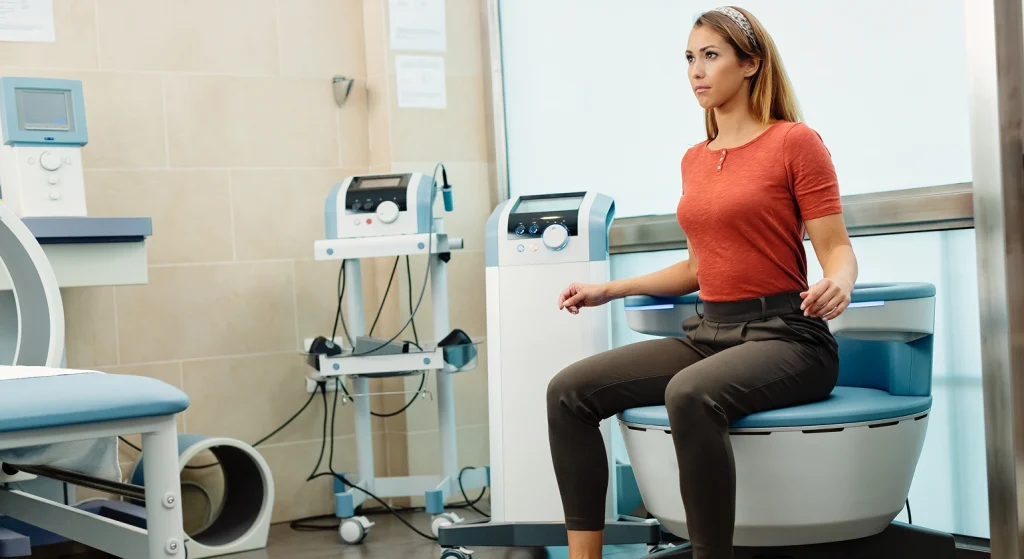
Modern clinics providing Incontinence physiotherapy Gurgaon now combine exercise-based therapy with advanced technology to improve treatment outcomes.
Some clinics use a non-invasive chair that uses High-Intensity Focused Electromagnetic (HIFEM) technology to stimulate the pelvic floor muscles.
During treatment, patients sit comfortably while the device delivers electromagnetic pulses that trigger deep therapeutic contractions of the pelvic floor muscles. These contractions are stronger than what can typically be achieved through voluntary exercises alone.
A single session can produce thousands of pelvic floor contractions, helping to:
- Strengthen weak pelvic muscles
- Improve bladder control
- Reduce urinary leakage
- Support intimate and pelvic health
When combined with guided exercises from an experienced physiotherapist, this technology can significantly enhance the results of Incontinence physiotherapy Gurgaon.
Lifestyle Changes That Support Recovery
Alongside exercise, behaviour changes are also important. The Bladder control physiotherapy Gurgaon assists patients in understanding how daily routines influence bladder function.
Easy adjustments could include:
- Monitor fluid intake
- Reducing caffeine consumption
- Beware of bladder irritations
- Maintain a healthy body weight
In conjunction with the Incontinence physiotherapy Gurgaon, these modifications can lead to lasting improvements.
The emotional impact of incontinence
In addition to physical signs, bladder leakage could impact the mental and emotional health of a person. People tend to avoid social events and long journeys, or exercise, because they are afraid of frequent urinations.
A lack of confidence may influence relationships and general satisfaction. Looking for help via Incontinence physiotherapy Gurgaon is not only about recovery from physical pain, it’s also about recovering dignity and independence.
Who is at a higher risk?
Certain groups are more susceptible to developing incontinence
- Women after childbirth
- Postmenopausal women
- Men after prostate surgery
- People who are overweight
- Patients suffering from chronic cough
- People with neurological disorders
The early intervention of Incontinence physiotherapy Gurgaon helps to prevent signs from getting worse.
When Should You Seek Help?
A specialist should be consulted for advice if:
- Leakage occurs frequently
- Symptoms interfere with daily activities
- You wake up multiple times at night to urinate
- Fear of leakage prevents you from leaving home
Neglecting symptoms can result in issues, including skin irritation or urinary tract infections. It can also cause emotional distress.. The right time to seek Incontinence physiotherapy Gurgaon offers secure and well-organised solutions.
A customised approach can make all the
Every patient’s case is individual. The degree of leakage and muscle strength, as well as lifestyle and age, each influence the recovery process.
Expert-led programmes, including Stress incontinence Gurgaon physiotherapy, Urge incontinence physiotherapy Gurgaon, and Bladder control physiotherapy Gurgaon, can be tailored according to the individual’s demands. If you follow the correct instructions and perseverance, many people can get control with no surgical intervention.
Conclusion
Stress and urge incontinence can both cause bladder leakage; however, their reasons and treatments differ. Recognising the type of bladder leakage is the most important factor in achieving successful healing. When your leakage is triggered in the course of physical exercise or following an intense desire, help is to be found.
Expert care offered by the Incontinence physiotherapy Gurgaon provides a non-invasive, reliable, and safe solution to both kinds of incontinence. If you’re struggling with issues with your bladder control, Painflame Clinic by Dr Harish Grover offers special physiotherapy treatments that treat tension and urge-incontinence, with individual attention and treatment.
Frequently Asked Questions (FAQs)
How can I tell if I have stress or urge incontinence?
If the leakage is experienced when you cough or during physical activity, it is most likely due to an indication of stress-related incontinence. If it is triggered by an abrupt need to go for a urination, then it’s likely to be an urge-incontinence.
Can physiotherapy treat urinary incontinence?
Most cases do get better with physiotherapy for incontinence in Gurgaon.
How long does physiotherapy take to show results?
A majority of patients see improvement after four to six weeks of continuous treatment.
Is stress incontinence common after pregnancy?
Yes, weak pelvic muscles during childbirth are often the cause, and physiotherapy for stress incontinence will help to strengthen the pelvic muscles.
What exactly does physiotherapy for urge incontinence consist of?
Urge incontinence physiotherapy from Gurgaon concentrates on bladder training as well as relaxation techniques and exercises for coordination of muscles.
Are bladder control exercises safe?
Yes. Physiotherapy to control bladder function in Gurgaon is not invasive and suitable for both women and men.
Can men benefit from physiotherapy for incontinence?
Absolutely. The males, specifically those who have prostate surgery, gain tremendously from the physiotherapy for incontinence in Gurgaon.
What is the best time to consult an expert?
If you notice that leaks are affecting your day-to-day routine or level of confidence, it’s an ideal time to get help from a professional.