

Nerve Compression Syndrome Treatment
Get advanced non-surgical nerve compression therapy at Painflame Clinic with a professional physiotherapist, specialised rehabilitation, and lasting relief.
 6,200+ Reviews Trusted by thousands.
Recommended by experts.
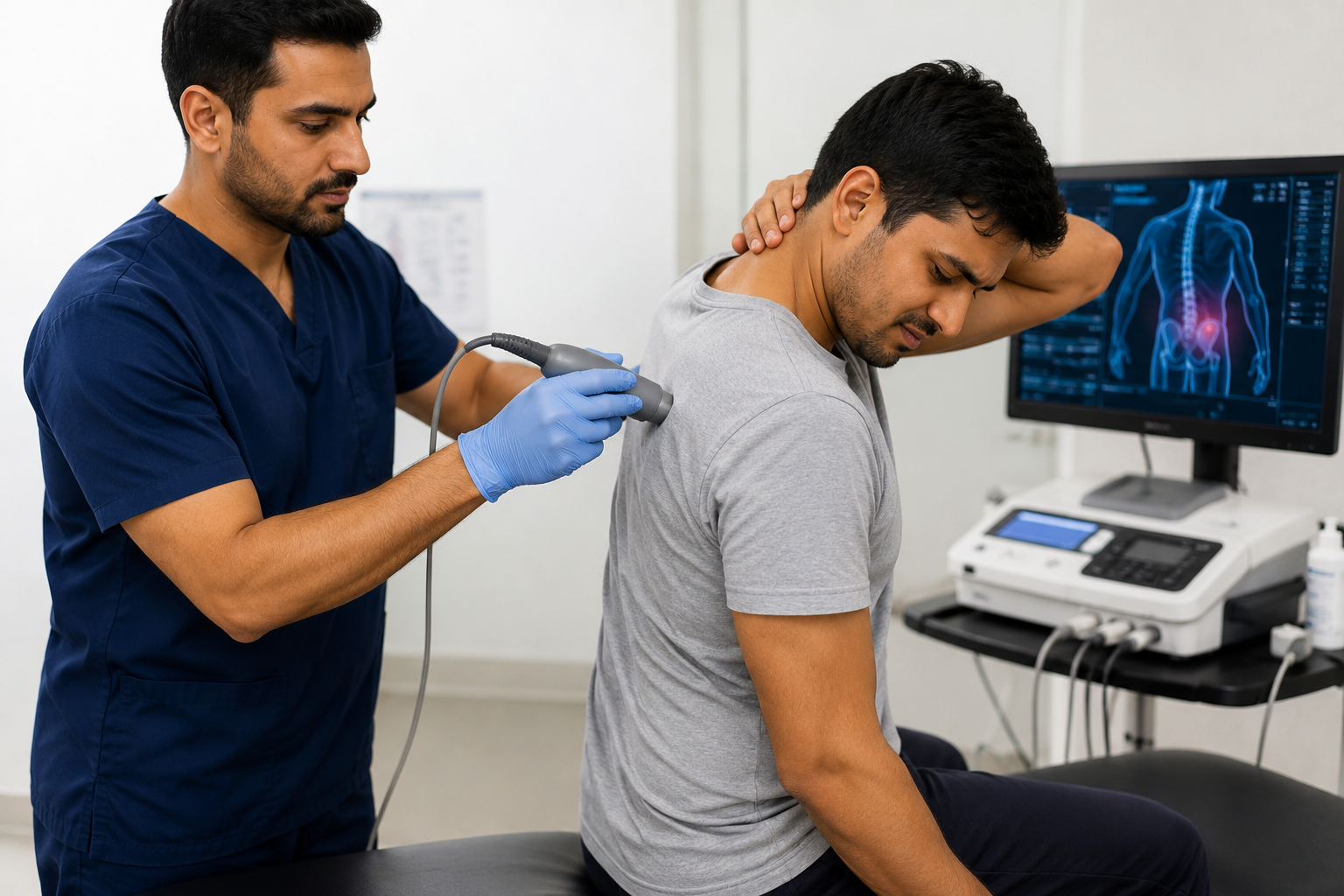
Advanced Nerve Compression Syndrome Treatment
Experience precise, non-surgical nerve compression therapy at Painflame Clinic. We offer customized physiotherapy and rehabilitation programs to ease discomfort, restore flexibility and strength naturally, and take the pressure off irritated nerves.
What is Nerve Compression Syndrome?
Nerve compression syndrome, often called the pinched nerve or a trapped nerve, occurs when nerves are compressed or squeezed by the surrounding tissues; nerves act as your body’s communication network, transmitting signals between the brain, the spinal cord, and the rest of the body. They are compressed by an excess or encroachment of tissue—such as bone spurs (bony overgrowths), herniated discs, or swollen muscles/tendons crowding the nerve space.
Nerve compression can occur anywhere in the body, but most commonly occurs within tight anatomic tunnels such as the elbow, wrist, or spinal column. This pressure irritates the outer protective coating of the nerve, creating localised inflammation and radiating pain.
Common Causes of Nerve Compression
- RSI: Repeating the same movement over the day might produce swelling in a particular area of the tissue that will eventually push on the nerves around it.
- Digital Strain: Prolonged uncomfortable positions such as working on flat keyboards and pressing elbows on hard surfaces cause regular strain areas affecting hand function and coordination.
- Ergonomics and Poor Posture: Slouching forward shifts your posture, compressing the delicate nerves exiting your neck and lower back.
- Gymnastics and sports injuries: Heavy lifting with incorrect form or sudden twisting movements can cause severe muscle spasms or force spinal discs to bulge against adjacent nerves.
- Anatomical narrowing (Arthritis and bone spurs): Wear-and-tear arthritis causes bone spurs to grow; these extra growths can crowd and narrow the spaces (like the spinal canal or foramina) where your nerves travel.
Symptoms of Nerve Compression Syndrome
Since nerves handle your sensations (sensory) and how you move (motor), when a nerve is pinched, it can cause a unique set of symptoms along its route.
- Sharp, radiating pain: A burning or electric sensation radiates away from the point of the compression (e.g. the pain radiating downwards from the neck into the arm).
- Numbness, or tingling: A persistent “pins and needles” feeling or an altered sensation (paresthesia) in the affected skin.
- Impaired Hand Strength & Coordination: Frequently dropping objects or struggling with fine motor tasks like turning doorknobs and buttoning shirts due to disrupted motor signals.
- Muscle Wasting (Atrophy): When a chronic or advanced case is present, the muscle supplied by the compressed nerve shrinks due to a lack of stimulation.
- Stiffness & Reduced Range of Motion: Joint tightness or protective muscle guarding (spasms) is triggered by the body to prevent further nerve irritation.
When Should You Seek Treatment?
Though mild nerve irritations may be relieved with time, you must get a professional assessment immediately if you notice one of these symptoms:
- The symptoms persist for longer than a week, despite treatment and the use of ice.
- A gradual weakness of your hand, either arm, or leg (such as a foot drop).
- The numbness spreads or impairs your ability to detect temperature changes.
- The pain that disturbs your sleep or hinders your ability to do your daily responsibilities.
How We Diagnose Nerve Compression
Proper diagnosis is necessary to treat symptoms, treating the source of pressure without addressing the root cause will provide only temporary relief. At Painflame Clinic: Our diagnostic method pinpoints the exact inflamed nerve and where it is trapped.
- Complete Physical Examination: Your symptoms are mapped in relation to dermatomes (specific areas of skin that are linked to specific spinal nerves) to determine the source of the pain.
- Orthopaedic and Neurological Tests: Manual tests such as Phalen’s test and Spurling’s test are specific and safe in provoking or relieving symptoms along specific nerve pathways to assess if there is irritation.
- The analysis of mobility and the range of motion: The exact measurement of your movements to identify which joint movements cause nerve pain or symptoms.
- Postural and ergonomic screening: Examining your posture and sitting mechanics to find structural patterns which cause nerve crowding.
- Diagnostic Imaging (X-ray and MRI): If there are structural issues, such as arthritis, bone spurs or even a herniated disc, we can coordinate digital imaging so that we can see the bone’s underlying and soft tissue structures in clear detail.
Nerve Compression Syndrome Treatment at Painflame Clinic
Our primary therapeutic goal is space restoration. By decreasing inflammation in your tissues, improving your joint alignment and moving the afflicted nerve, we take the physical pressure off neural pathways, promoting natural healing and helping you avoid surgery.
Physiotherapy for Nerve Compression
Customised physical therapy is the most effective method of treatment for nerve compression. We employ evidence-based strategies to control inflammation early, reduce the need for muscle protection and slowly rebuild the tissues around them to prevent recurrence.
Manual Therapy
Our professionals utilise precise joint mobilisations and myofascial releases (Deep Tissue and Soft-Tissue Therapy) to loosen muscles that are tight and to expand the narrow tunnels of anatomical structures through the nerves. The hands-on method reduces stress on the structural system immediately.
Advanced Electrotherapy
To treat chronic, radiating pain without using medication alone, we employ advanced techniques such as:
- TENS (Transcutaneous Electrical Nerve Stimulation) disrupts pain signals before they reach the brain.
- Ultrasound therapy utilises high-frequency sound waves to generate deep-tissue thermal effects, accelerating cellular repair and improving local circulation.
- Laser Therapy: Uses Low-Level Laser Therapy (LLLT) or Cold Laser Therapy to lessen nerve root inflammation quickly.
Specialised Rehabilitation Exercises
When pain is controlled, we can introduce specific movement procedures:
- Nerve glides (Neurodynamics): Gentle exercises to slide the nerve across its path, breaking down inner adhesions while restoring normal mobility.
- Targeted strengthening: Exercises aimed at strengthening the muscles around the afflicted joint, so that the nerve tunnel remains stable during the day.
Ergonomic and Posture Correction
Treatment is only part of the struggle, the other part is to prevent re-injury. Our staff will assess your daily routine and make bespoke changes to your office setup, sleeping postures and lifting style to avoid repeated mechanical burden on the nerve.
How to prevent Nerve Compression Syndrome
- Optimize Your Workstation
- Prioritize Movement
- Lift Safely
- Maintain Core Strength
- Use Supportive Gear
- Avoid Postural Hazards
Frequently Asked Questions
What is the most effective treatment for neural compression syndrome?
Best way is to combine precise physiotherapy, manual tissue release and exercises to glide the nerve.
Does physiotherapy aid in relieving a compressed or pinched nerve?
Yes. Physical treatment can safely relax the muscles and lessen muscle spasms and tensions, re-organise neural tissue, enhance circulation locally and build muscles that support them to ease the pressure and prevent future episodes from happening.
How long is the recovery to treat the condition of nerve compression?
Moderate to mild cases usually recover in four to six weeks of continuous exercise. For more serious or chronic cases, it could take between 4 and 6 months of specialised rehabilitation in order for complete nerve healing and recovery of muscle.
What can cause nerve compression to take place without sudden injury?
It's usually caused by repetitive strain over a long time or by poor posture (like slumping at work), and by natural joint wear or inflammation of the tissues from daily overuse.
Are nerve compression syndromes related to arthritis?
Yes. Arthritis may cause your body to experience bone spurs and joint inflammation. The structural changes can narrow the tiny tunnels that nerves use to travel and can result in a pinched nerve.
Patient Feedback & Success Stories
Treatments
Our Services
Our doctors
Meet more Painflame specialists






Dr. Divakar Kumar
Sports Rehabilitation, Sports Injury Management, Musculoskeletal Rehabilitation, Performance Enhancement, Strength & Conditioning
Book Appointment

Dr. Jaya Sharma
Pilates Expert | Musculoskeletal Rehabilitation, Sports & Pelvic Floor Specialist
Book Appointment

Dr. Priyanka Bhuyan
Tailbone (Coccyx) Treatment, Chiropractic Care, Spine & Joint Rehabilitation
Book Appointment
Dr. Saksham Kapoor
Sports Physiotherapy, Musculoskeletal Rehabilitation, Pain Management, Injury Prevention & Recovery
Book AppointmentLatest Blogs
Tired of Back Pain? Here’s What Your Spine Is Actually Trying to Tell You
Most lower back pain comes down to daily habits — long hours hunched at a desk,…
Read More
Don’t Ignore Neck Pain: 4 Signs It’s More Than Muscle Strain
Most neck pain comes from poor posture, stress, or a bad pillow, and eases within a…
Read More
Why Thousands in Gurgaon Are Skipping the Clinic for Home Physiotherapy?
If you’re managing back pain, recovering from surgery, or dealing with chronic joint stiffness in Gurgaon,…
Read More