

Knee Pain Treatment
Walk Pain-Free Again with expert Knee Pain treatment focused on mobility, strength, joint support, and long-term relief.
 6,200+ Reviews Trusted by thousands.
Recommended by experts.
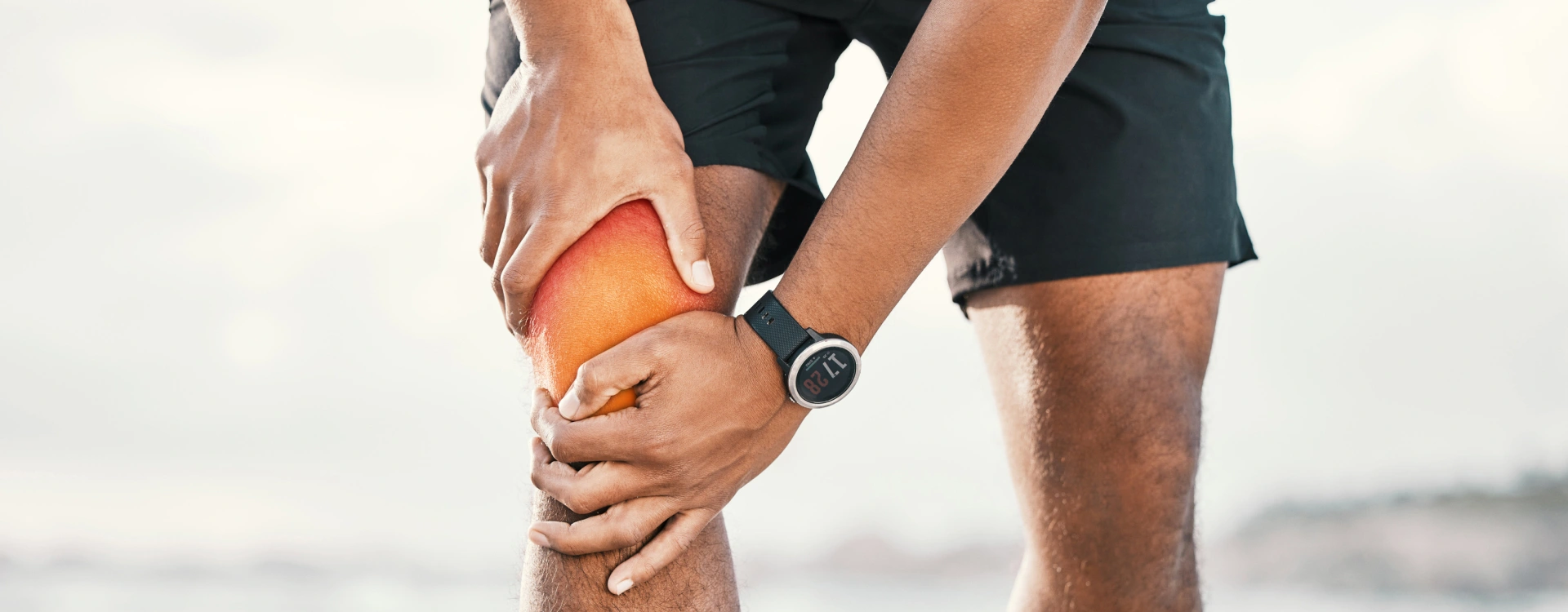
Knee Pain Treatment: A Look Into the Cause Behind Every Uncomfortable Step
Walking downstairs, bending down to pick something up, or even getting up from a chair can become uncomfortable when the knee starts to hurt. Sometimes, the discomfort is accompanied by swelling, a clicking sensation, or even a persistent ache that seems to appear without any reason. Knee pain can develop gradually through changes in the tendons, ligaments, joint, or surrounding muscles without any sudden injury. People often get confused because different conditions can produce almost similar symptoms around the same knee. Hence, properly understanding whether the pain is related to a tendon problem, osteoarthritis, meniscus damage, bursitis, muscle weakness, or ligament injury is an essential step towards the right treatment.
Understanding Knee Pain
It refers to the set of discomfort that arises from the knee joint or the tissue that surrounds it. The pain can be temporary, as in the case of soreness after some unfamiliar activity, or even persistent, which can interfere with daily life. The most important thing worth noting is that knee pain is a symptom that may come from different structures and varying reasons.
Paying close attention to the character of the pain gives ideas about the issue. When there is a gradual, aching pain that is also accompanied by stiffness, osteoarthritis might be the reason. Acute injury might be the reason if there is a sudden, sharp pain right after twisting the knee. A pain that occurs due to prolonged sitting or while climbing stairs can have a whole different cause than the one that appears while running or jumping.
Why Does It Happen?
There can be many reasons behind it. In osteoarthritis, the tissues of this joint undergo gradual changes. The cartilages that provide a smooth and low-friction surface can also deteriorate, and some changes may also occur in the underlying bone, surrounding tissues, and the joint lining. These issues, combined, can cause pain and stiffness while also reducing joint function.
Meniscus injury occurs when fibrocartilaginous tissue lying between the tibia and femur becomes torn. The severity of pain depends on the location and size of the tear.
Ligament injuries are a bit different. Suppose the ligament ACL is stretched beyond its limit; it can cause some or all of its fibres to tear. This leads to a compromise of knee stability.
In many cases, the tendons become painful when the load exceeds their capacity. There are conditions like patellar tendinopathy when the tendon undergoes changes associated with impaired load tolerance. Muscle weakness can also change the way forces are distributed around the knee. When the muscles that control the hip, thigh, and lower leg can’t provide proper support, it can put more demand on the joint and the surrounding tissues.
Most Common Symptoms
Knee pain can feel really different based on the underlying problems. Some of the most common symptoms include:
- Pain during squatting, climbing stairs, running, or even walking
- Noticeable stiffness after sitting or resting
- Presence of swelling around the knee
- Clicking, catching, or locking
- Pain after a repetitive or high-impact activity
- Weakness around the thigh or knee
- Tenderness around particular areas of the joint
In addition, one should also pay close attention to the timing of symptoms, as it provides valuable clues. Osteoarthritis causes pain and stiffness that develops gradually. An acute ligament or meniscus injury starts almost immediately after twisting, landing, or direct trauma.
Who Is More Likely to Develop Knee Pain?
Knee pain may affect people of any age, but the risks to which different groups are exposed also differ. People who play demanding games like football, basketball, etc., regularly are more exposed to meniscus, tendon, and ligament injuries. Those who are in occupations requiring prolonged standing, squatting, lifting, repetitive physical work, or kneeling also place considerable demands on the joint. Age is another major cause behind degenerative conditions, such as osteoarthritis. In addition, excess body weight simply increases the mechanical load on the knees. If one has a sedentary lifestyle, it can contribute to knee pain as well, and that is because such a lifestyle makes the quadriceps, gluteal, and adjacent supporting muscles weak. As a result, the force is not distributed efficiently and places extra pressure on the knees, increasing the chances of damage.
When Should One Seek Help?
If there is minor knee soreness, reducing the aggravating activities can settle it. But professional assessment becomes inevitable when the symptoms persist, interfere with normal life, or worsen over time. You must seek quick medical help if you experience knee pain in the following ways:
- Immediately after an injury
- Rapid or substantial swelling
- Inability to put any weight on the leg
- A noticeable deformity
- Frequent locking of the knee
- Fever with visible swelling around the knee
Diagnosing the Knee Pain
Getting into the history of the patient is the start of the diagnosis. Doctors ask questions like when the pain started and how it developed, whether it follows an injury, the type of movements that reproduce it, the presence of swelling, clicking, locking, or instability. Once all the essential answers are available, the physical examination starts, which aims to assess:
- Stability of the joint
- Range of motion of the knee
- Strength of the quadriceps, hamstrings, and hip muscles
- Local tenderness
- Swelling
- Alignment and balance
- Particular tests to identify ligament or meniscus injuries
Imaging is used only if the doctors think that fractures or structural changes might be a reason. MRI gives a proper look into the details of the soft tissues like tendons, ligaments, and menisci.
How Does Physiotherapy Help You With Knee Pain
At its core, physiotherapy focuses on improving the ability of the knee to move, absorb load, and maintain stability. The type and severity of the underlying condition determine the rehabilitation programs. If weakness is contributing to pain, strengthening the hamstrings, gluteal muscles, calf, and quadriceps is the right option. When there is enough stiffness and uncomfortable movement, mobility exercises lead to the best results.
Physiotherapy is a highly effective option because it retrains the way in which the lower limb moves. Countless patients have improved balance, control, and weight distribution with the help of gait and functional exercises. Another important principle involved is progressive loading that promotes recovery and avoids muscle weakness due to loss of function.
Knee Pain Treatment at Painflame
Painflame Clinic starts the knee pain treatment with a detailed assessment to pinpoint the cause. We work on precisely identifying the source first before developing the individualised rehabilitation programme. Once the clear clinical picture of the condition is formed, our expert team can combine physiotherapy, manual therapy, chiropractic care, rehabilitation exercises, and other non-surgical approaches to improve the condition.
In addition, we also offer dedicated sports injury rehabilitation in case the knee pain results from sporting activity. This way, athletes and enthusiasts are able to return to their favourite sports safely as the doctors restore their strength, flexibility, and mobility. Home Physiotherapy is also available for those who find it difficult to travel to the clinic.
A Quick Look At the Recovery
There can’t be a single recovery period ensured by any knee pain treatment, and this is because the underlying causes behind this issue vary.
A few weeks are enough to settle a mild overuse problem by relying on appropriate rehabilitation and activity modification. If there is a ligament or meniscus injury, it requires a longer period for structural recovery. Osteoarthritis, on the other hand, is managed as a long-term condition that one should not expect to disappear quickly. The first sign of improvement arrives in the form of reduced pain and reduced swelling. After this stage, the range of motion increases, and lastly, the strength of the knee is improved.
Keeping the Issue From Returning
Once the required strength and capacity of the knee are developed, one must maintain the knee in the same condition to prevent recurrent knee pain. The best way to provide continued support to the knees is by strengthening the hamstrings, glutes, calf muscles, and quadriceps. Another major thing to care about is maintaining a proper body weight because excess body weight increases the mechanical load on the knees. WHO also recommends maintaining a healthy weight and physical activity as the best ways to avoid knee problems in the long run.
Knee pain prevention also demands proper movement habits, which people can do by avoiding spending extended periods in just one position. And most importantly, instability, recurring pain, or persistent swelling are some of the symptoms that need not be endured but assessed as early as possible.
Frequently Asked Questions
Can my knee pain be treated without surgery?
Sure. In fact, most knee pains are managed without involving surgery during treatment. An array of conservative approaches is available for it, starting from physiotherapy, progressive strengthening, activity modification, mobility exercises, etc., to help people get rid of these pains.
If I am experiencing persistent knee pain, does it reflect cartilage damage?
Not necessarily. This pain may originate from tendons, muscles, ligaments, bursae, meniscus, joint surfaces, or other structures. In many cases, the presence of cartilage changes in the scans does not explain severe damage.
Why does my knee hurt whenever I climb stairs?
Climbing upstairs is a bit more demanding on the knee and the muscles that control it. If you experience such pain on a regular basis, it can be patellofemoral pain, muscle weakness, osteoarthritis, or something else. Getting it properly assessed is the best option.
Should I minimize knee activity to the lowest levels if it hurts?
This is not the best path. Stopping movement completely leads to weakness and stiffness. The right approach to deal with it relies on the cause and the severity of the condition. You can definitely avoid high-impact or aggravating activities for some time and choose appropriate exercises under professional guidance.
How can I prevent knee pain from coming back?
Maintaining good posture, strengthening leg muscles, stretching regularly, wearing supportive footwear, and avoiding excessive strain can help prevent recurrent knee pain and injuries.
Patient Feedback & Success Stories
Treatments
Our Services
Our doctors
Meet more Painflame specialists






Dr. Divakar Kumar
Sports Rehabilitation, Sports Injury Management, Musculoskeletal Rehabilitation, Performance Enhancement, Strength & Conditioning
Book Appointment

Dr. Jaya Sharma
Pilates Expert | Musculoskeletal Rehabilitation, Sports & Pelvic Floor Specialist
Book Appointment

Dr. Priyanka Bhuyan
Tailbone (Coccyx) Treatment, Chiropractic Care, Spine & Joint Rehabilitation
Book Appointment
Dr. Saksham Kapoor
Sports Physiotherapy, Musculoskeletal Rehabilitation, Pain Management, Injury Prevention & Recovery
Book AppointmentLatest Blogs
Neck Stiffness: कारण और 5 मिनट की एक्सरसाइज से राहत
गर्दन की अकड़न (Neck Stiffness): कारण और 5 मिनट की एक्सरसाइज से राहत क्या सुबह उठते…
Read More
Navel Displacement: लक्षण, पहचान और उपचार
क्या आपको अक्सर पेट में अनजान दर्द रहता है? क्या खाने के बाद ब्लोटिंग, गैस या…
Read MoreCore Strengthening Exercise जो कमर दर्द को जड़ से खत्म करे
क्या लंबे समय बैठने के बाद कमर दर्द होने लगता है? क्या सुबह उठते ही पीठ…
Read More