
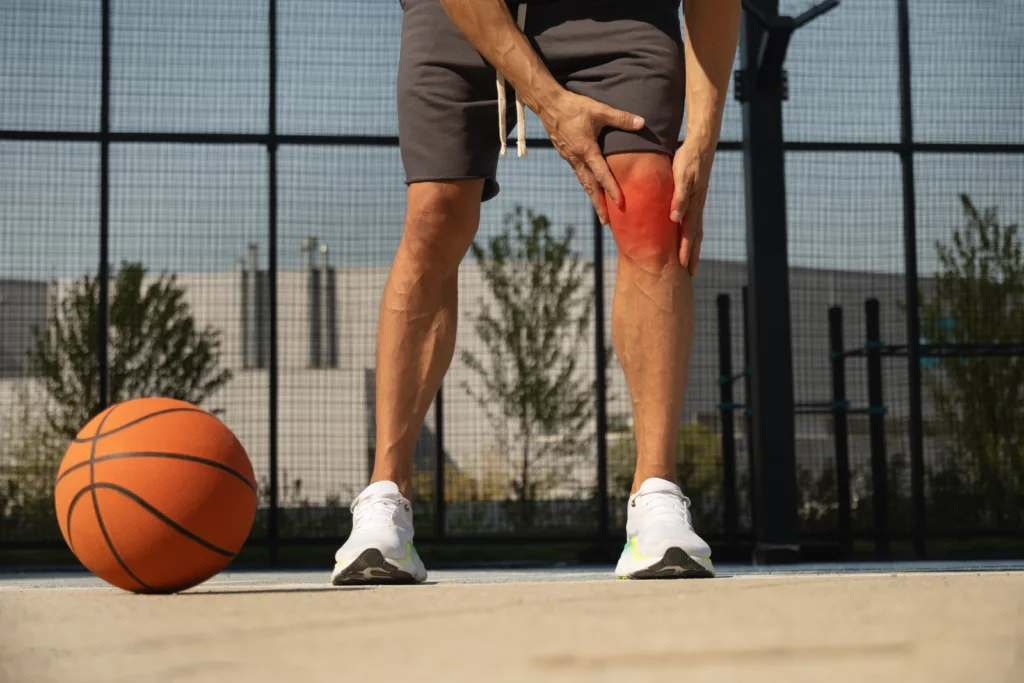
Saturday, 7 am, a box-cricket turf in Gurgaon. Twelve people who last ran for a cab on Tuesday are about to sprint between the wickets. By 9 am, about two of them are limping to the car park, holding their legs. And this keeps happening to desk workers with a sedentary lifestyle. There is a name for it: weekend warrior syndrome.
Weekend warrior syndrome is the pattern of sports injuries that follows five days of sitting and one day of hard play. The sudden jump in effort, with no build-up during the week, tears muscles and tendons. Most of these injuries can be prevented with a few weekday habits. Here is why it happens, and what to do before and after the game.
Why Does Weekend Warrior Syndrome Hit Office Professionals?
Office professionals get it more than most people because their jobs keep them sitting all day. The ICMR-INDIAB study of 14,227 adults found that most of the exercise happens at work, as part of a physical job. A desk job gives you none of that. The study also found inactivity highest in cities and among higher-income groups.
India’s National NCD Monitoring Survey 2017-18 shows what a city adult’s week looks like:
- 62 minutes a day of physical activity, against 101 for rural adults
- 51.7% short of 150 minutes of moderate activity a week
- 14.8% doing any sport or fitness in their free time
A 2016 review in the British Journal of Sports Medicine found that a sudden jump in training load is likely behind a large share of muscle and tendon injuries. For a desk worker, Saturday’s game is that increase, as tendons are asked for force they haven’t produced all week.
Which Injuries Do Weekend Warriors Pick Up Most Often?
Weekend warriors hurt the parts that sprint and swing: ankles, calves, hamstrings, knees, shoulders and elbows. The NHS lists skipping the warm-up, tired muscles and sport itself as the common causes of sprains and strains.
Here is what each injury feels like, and what usually sets it off:
| Injury | What it feels like | What usually sets it off |
| Ankle sprain | Pain, swelling or bruising; you can’t put weight on it | Twisting the ankle |
| Hamstring pull | Sudden sharp pain at the back of the leg, then tenderness and bruising | Sprinting without a warm-up or on tired legs |
| Knee sprain or ligament tear | Pain, with a pop and a knee that gives way | Twisting or overstretching the knee during play |
| Achilles tendon tear | Severe pain and swelling near the heel | Landing from a jump or a sharp change of direction |
| Shin splints | Pain and tenderness along the front of the shin | Running or jumping on hard surfaces after weeks of inactivity |
| Shoulder impingement | Pain when lifting the arm, especially overhead; a weak arm | Repeatedly lifting the arm overhead |
| Tennis elbow | Pain on the outside of the elbow, spreading to the forearm | Repeated gripping and twisting of the wrist |
| Low back pain | Ache or stiffness in the lower back | A pulled back muscle from overstretching or twisting |
What Should You Do After a Weekend Injury?
Most sprains and strains settle with two to three days of first aid at home. Injuries that drag on need a physiotherapist, while a few warning signs mean a hospital visit the same day.
First 48 to 72 Hours
For 2 to 3 days after a sprain or strain, follow PRICE, as the NHS advises:
- Protect it with a brace or supportive shoes, and rest it
- Ice for up to 20 minutes every two to three hours
- Compress with a bandage by day and elevate on a pillow
- No hot water bag, massage or alcohol for three days
- Take paracetamol for pain and ibuprofen gel for swelling
- Start moving once pain allows
See a Physiotherapist
If injury is slow to heal or keeps coming back, opt for the consultation. Also consider a visit if you are returning to sport after a long time. The professionals will help you with exercises that speed recovery and prevent re-injury.
When to Go To Hospital
Go to a hospital the same day if:
- You heard a crack, the limb has changed shape or gone numb, or the skin has turned blue, grey or cold (possible fracture)
- A joint gives way (possible torn ligament)
- You felt a pop at the back of the heel and can’t push off your toes (possible Achilles tear)
- Pain or swelling keeps getting worse, or you can’t walk a few steps
How Do You Keep Playing Without Getting Hurt?
Saturdays can still be all fun and way out of the work stress if you prepare your body beforehand. Slight changes in your daily schedule would be enough to prevent standing on your legs from being a challenge on Monday.
- Move on at least two weekdays: A brisk 30-minute walk or a cycle ride means Saturday’s game is only a small step up from the rest of your week.
- Do strength training twice a week: Target your whole body muscles with squats, lunges, push-ups and planks. A review in the British Journal of Sports Medicine found that strength training cut sports injuries to less than a third and nearly halved overuse injuries.
- Warm up for 10 to 15 minutes before you play: Start easy and build to game pace:
- A light jog or skipping to raise your heart rate
- Leg swings, arm circles and hip circles to loosen your joints
- Glute bridges and a few lunges to get the muscles working
- Short sprints, side shuffles and jumps that are specific to your sport
- Stop when a muscle pulls, or your legs go heavy: Tired muscles get injured more easily.
How Does a Physiotherapist Help With Weekend Warrior Injuries?
A physiotherapist treats the injury you have and finds the weakness that caused it, so the next game doesn’t repeat it. At a first appointment, the NHS explains, the physio asks about your symptoms, medical history and lifestyle (your desk hours belong in that answer), checks the painful area by hand and tests your strength and balance, then sets out a plan.
Physiotherapy for sports injuries usually includes:
- Exercises to restore movement and rebuild the muscle that failed
- Manual therapy, where the physio works on the painful area by hand
- Advice on managing symptoms day to day
- Exercises to do at home between sessions
If the injury stops you from getting to a clinic, our home physiotherapy service in Gurgaon is the solution.
Final Thoughts
Weekend sport is good for a desk-bound body. But the injuries come from asking muscles that have sat all week to sprint on Saturday. A couple of weekday walks, two strength sessions and a proper warm-up close most of that gap. If you do get hurt, early treatment stops a small strain from turning into months off the field.
Painflame’s physiotherapists treat weekend warrior injuries and plan the weekly routine that stops them from coming back. Home visits are available in Gurgaon and clinics in Gurgaon, Noida, Faridabad, Paschim Vihar and Dwarka. Book an assessment before your next game, or after one that didn’t go to plan.
Frequently Asked Questions
How to deal with re-injury anxiety associated with weekend sports?
Re-injury anxiety is normal, and a systematic review of psychological factors found confident players were more likely to get back to their old level. Build confidence in stages, with drills first and then a light game, before you play a full match.
What is the hardest sports injury to recover from?
A torn anterior cruciate ligament (ACL) in the knee and a torn Achilles tendon are among the slowest to recover from. Each can take up to a year before it’s safe to play sport again.
How to strengthen the body to avoid injury?
The WHO advises muscle-strengthening exercise that works all the major muscle groups on at least two days a week. Train your back, shoulders and core as well as your legs.